
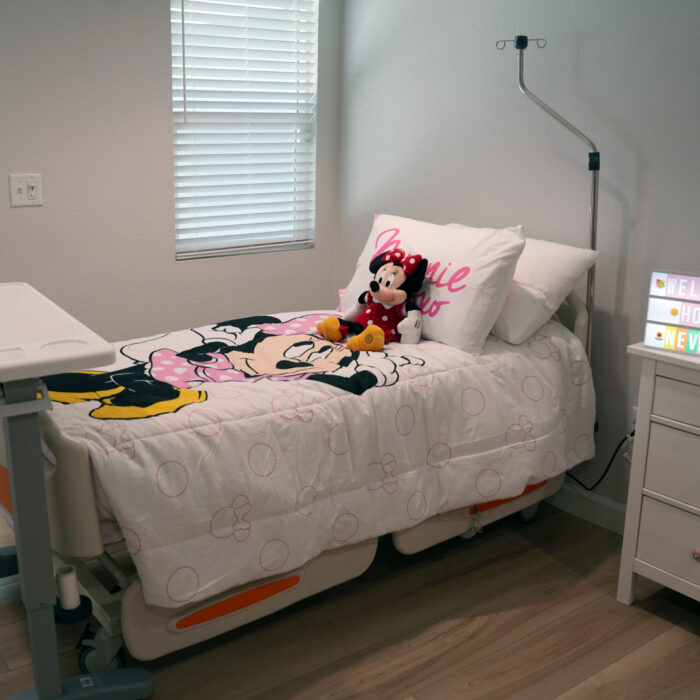
Group Homes for Children with Special Health Care Needs (GHCSHNs) are small homes that provide 24-hour nursing care for children with intellectual and developmental disabilities and special health care needs.
Currently, there are two GHCSHNs open in California. One is in Sacramento and serves the Alta California Regional Center. The other is in Merced and serves the Central Valley Regional Center. Two more homes are expected to open in 2026: one in the San Diego Regional Center area and the other in the Central Valley Regional Center area.
Who are these homes for?
GHCSHN homes support children and young adults ages 7 to 21 who have special health care needs, such as:
- respiratory needs requiring a ventilator (a machine that helps someone breath) or tracheostomy (a tube placed in the neck to help with breathing)
- feeding needs such as the use of gastrostomy tubes (a feeding tube placed in the stomach)
- other specialized needs such as intravenous medications
Supportive care for daily living is also provided, such as dressing, eating and moving from a bed to a chair. GHCSHNs offer a homelike alternative for children who would otherwise be served in a hospital or nursing facility. Each home serves up to five children.
How does it work?
Regional centers work with families and community partners to identify children and determine the best place to meet their health care needs. If a child qualifies for a GHCSHN and it is determined to be the best option, the regional center will work with families and the child’s care team to coordinate the move into the home.
What can you expect?
Service providers work with the child’s care team, which may include doctors, nurses, therapists, and family members, to plan the services and support the child needs in the home. The service provider also coordinates transportation and arranges specialty care appointments, daily activities, as well as day-to-day care.
How are family members involved?
Family members are an important part of the child’s care team and decision-making. They are encouraged to visit their loved one in the home as much as possible.